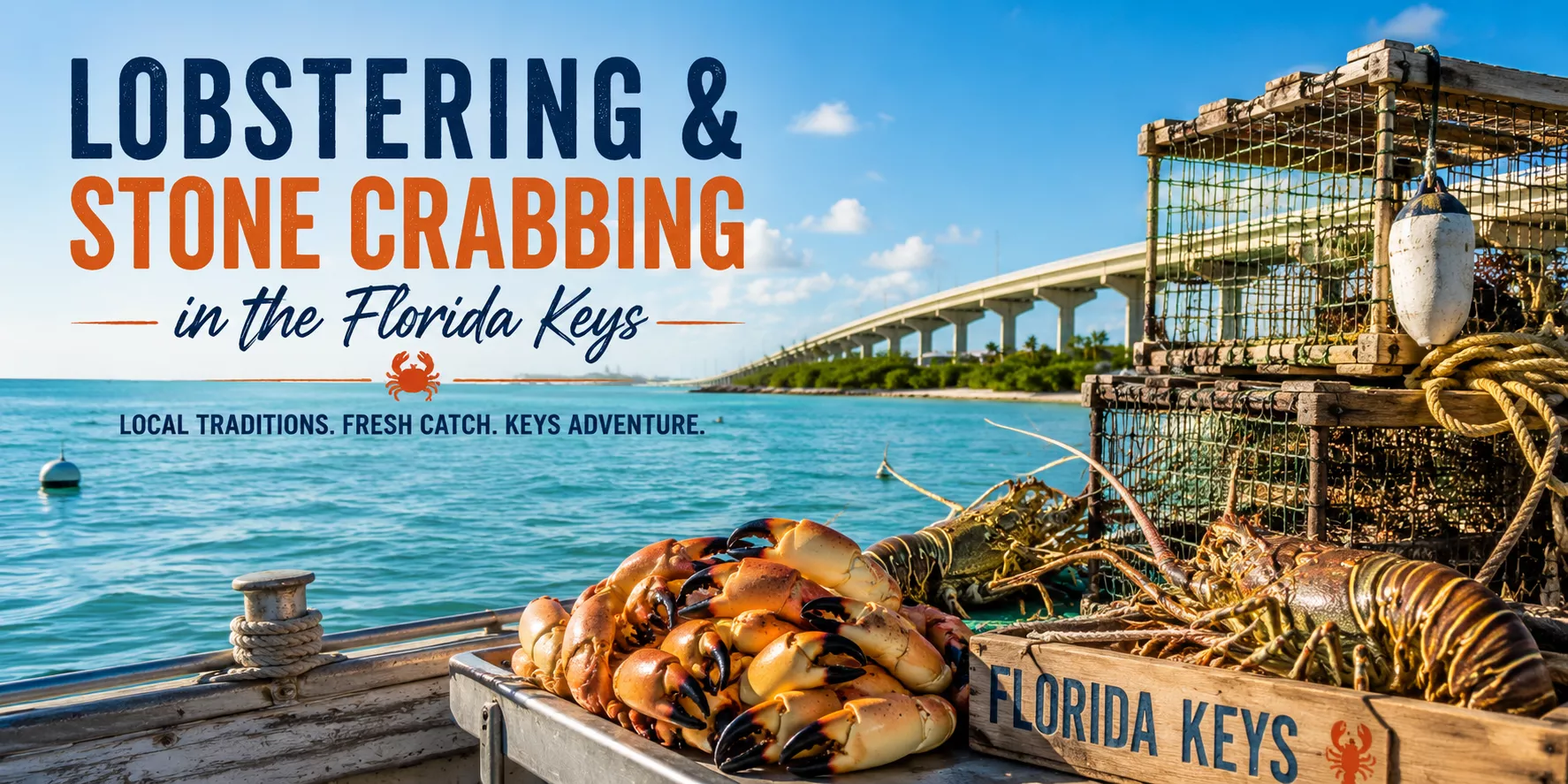
Marathon sits in the heart of the Florida Keys — some of the best water in the state for two of Florida’s most hands-on seafood traditions. Here’s how families can join in, when the seasons open, and what the rules are before you get in the water or drop a trap.
Few vacation memories stick like pulling your own dinner out of the ocean. In the Florida Keys, two seasonal harvests make that possible for regular families, not just commercial crews: spiny lobster in the warmer months and stone crab in the cooler ones. Both are approachable, both are legal for recreational harvesters with the right license and gear, and both are a genuine thrill for kids old enough to snorkel or help bait a trap. Basing yourself in Marathon — Mile Marker 50, midway down the chain — puts you within a short boat ride of productive grounds for each.
Before you plan around either season, one rule of thumb: the state updates dates, limits, and sizes regularly, so treat everything here as your starting point and confirm the current year’s rules with the Florida Fish and Wildlife Conservation Commission (FWC) before you harvest.
Spiny lobster: the summer tradition
Florida spiny lobster (no big claws — the flavor’s all in the tail) is the Keys’ signature summer catch, and the season comes in two parts.
The two-day mini-season
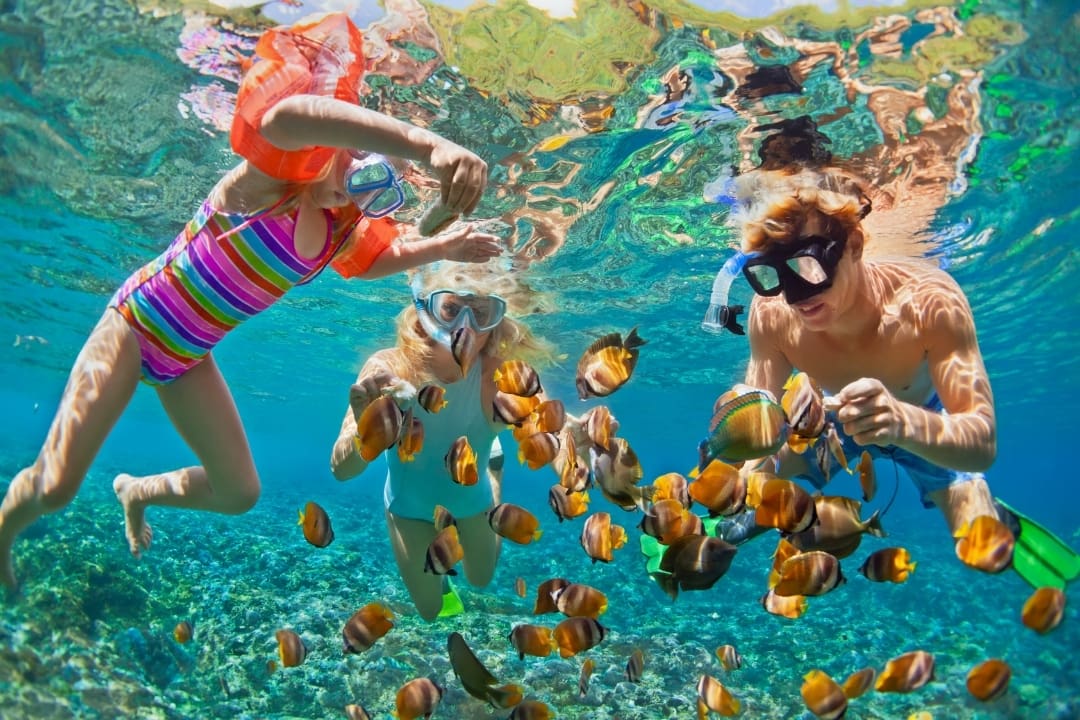
The recreational “mini-season” — officially the sport season — is always the last consecutive Wednesday and Thursday of July. In 2026 that’s July 29–30. It’s the busiest two days on the water all year: divers and snorkelers head out at first light to get a jump on the regular season. It’s a lot of fun, but the water gets crowded, so it’s best for families with confident swimmers and a cautious captain.
The regular season
The regular spiny lobster season runs August 6 through March 31 — a far more relaxed window, with the same daily limits and far less traffic. For a first-timer family, the regular season is often the better introduction.
The rules that matter (Monroe County / the Keys)
- License: Every harvester 16+ needs a Florida recreational saltwater fishing license plus a spiny lobster permit.
- Daily bag limit: 6 lobster per person, per day in Monroe County (the Keys) and Biscayne National Park.
- Minimum size: carapace larger than 3 inches, measured in the water — you must carry a measuring gauge.
- No egg-bearing females: if you see eggs on the underside, she goes back.
- Night diving is prohibited in Monroe County during the two-day mini-season.
These are the current FWC rules as of the 2026 season; always re-check the FWC spiny lobster page for the year you’re traveling.
Stone crab: the winter delicacy
If you’re visiting in the cooler months, stone crab is the Keys’ other great hands-on harvest — and it comes with a conservation twist that kids find fascinating: you take only a claw and return the crab alive to regrow it.
Season and how it works
Stone crab season runs October 15 through May 1 each year. Recreational harvesters typically use a few traps set off a dock or boat, check them after a day or two, remove a legal claw, and release the crab. It’s lower-key than lobstering — no diving required — which makes it especially good for families with younger children.
The rules that matter
- Legal claw size: the forearm (propodus) must be 2 7/8 inches or longer.
- Claws only: it’s illegal to keep the whole crab; take one legal claw and return the animal to the water.
- No egg-bearing females.
- Daily limit: 1 gallon of claws per person, or 2 gallons per vessel, whichever is less.
- Traps: up to 5 traps per person, and recreational harvesters 16+ must complete the free annual online stone crab trap registration with FWC.
Confirm the current rules on the FWC stone crab page before the season you’re planning around.
Season at a glance
| Harvest | Season window | Daily limit (recreational, Keys) | Minimum size | Key rule |
|---|---|---|---|---|
| Spiny lobster — mini-season | Last Wed & Thu of July (July 29–30, 2026) | 6 per person | 3″ carapace (measure in water) | No night diving in Monroe County |
| Spiny lobster — regular | Aug 6 – Mar 31 | 6 per person | 3″ carapace | License + lobster permit |
| Stone crab | Oct 15 – May 1 | 1 gal claws/person (2 gal/vessel) | 2 7/8″ claw | Claws only; return the crab alive |
Doing it with kids: a few tips
- Match the harvest to their age. Stone crabbing (dock-and-trap, no diving) suits younger kids; lobstering rewards confident snorkelers who can free-dive a few feet.
- Go guided the first time. Local outfitters supply gear, know the productive spots, and handle the licensing questions — a low-stress way to learn. Ask the team at Fish Camp in Marathon about charters and rentals.
- Bring the right gear: a measuring gauge (required for lobster), a dive flag, mesh bags, gloves, and reef-safe sunscreen.
- Respect the limits. The size rules, egg-bearing protections, and bag limits are what keep these harvests alive year after year — a good real-world lesson for kids on why conservation works.
Where to stay — and cook your catch
Half the fun is eating what you caught. A whole-home rental with a private dock, fish-cleaning station, and full kitchen or grill turns your harvest into dinner without a restaurant markup. That’s exactly how the Keys Cove waterfront homes in Marathon are set up — dock out back, gear on hand, and a kitchen for the boil. Many local seafood restaurants will also cook your day’s catch for you if you’d rather someone else man the pot.
Planning the rest of the trip? See our guide to planning a family trip to Marathon, the top kid-friendly things to do in Marathon, and why Marathon is the ultimate Florida Keys family destination.
Frequently Asked Questions
When is lobster mini-season in the Florida Keys in 2026?
The two-day recreational sport season (“mini-season”) is July 29–30, 2026 — always the last consecutive Wednesday and Thursday of July. The regular season then runs August 6 through March 31.
Do I need a license to catch lobster or stone crab in the Keys?
Yes. Harvesters 16 and older need a Florida recreational saltwater fishing license; lobster also requires a spiny lobster permit, and recreational stone crabbers must complete FWC’s free annual trap registration.
How many lobster can I keep?
In Monroe County (the Keys) and Biscayne National Park, the limit is 6 spiny lobster per person, per day, with a carapace larger than 3 inches measured in the water. No egg-bearing females.
How does stone crabbing work if you can’t keep the crab?
You harvest one legal claw (2 7/8 inches or longer) and return the live crab to the water, where it regrows the claw. The recreational limit is 1 gallon of claws per person, or 2 gallons per vessel, whichever is less.
Is lobstering or stone crabbing safe for kids?
Stone crabbing is very family-friendly — it’s done from a dock or boat with no diving. Lobstering suits older kids comfortable snorkeling and free-diving. First-timers of any age do best on a guided trip with a local outfitter.
Rules and dates reflect FWC regulations as of 2026 and can change year to year. Always confirm the current season, limits, and licensing at myfwc.com before you harvest.